



Modern medicine has developed more targeted ways to treat cancer. Traditional therapies like radiation therapy, chemotherapy, and surgery are still crucial, while targeted therapy has become a promising development.
This is a kind of cancer treatment that focuses on proteins that regulate the growth, division, and spread of cancer or malignant cells. For optimal targeted therapy, you might visit the leading cancer hospital in Siliguri or near your location.
It concentrates on specific chemicals and genetic changes in the body that help cancer cells grow and spread. Thus, targeted therapy has become a vital part of care for many cancers.
Targeted Therapy Overview
A form of cancer treatment called targeted therapy uses medications/ chemicals to recognize and target particular cancer cells. These therapies focus on specific genes, proteins, or tissue settings in the body that support the development and survival of cancer.
When cells undergo genetic changes or alterations, these lead to unchecked growth. In the body, many of the molecular changes that cause this process have been detected by scientists/ medical experts. By interfering with these anomalies, targeted therapy basically stops/ reduces the spread of cancer to further organs.
Monoclonal antibodies or small-molecule medications make up most targeted therapy. Researchers are better equipped to create therapies that specifically target the proteins and DNA changes that cause cancer.
How Does Targeted Therapy Operate?
To differentiate themselves from normal cells, cancer cells usually have distinctive markers or molecular characteristics. Medications for targeted therapy help identify and interact with these characteristics.
Now, depending on the disease type and treatment, targeted therapies can:
- Stop the signals that encourage the growth of cancer cells
- Stop the division of cancer cells
- Cause the death of cancer cells
- Stop the blood flow that cancers require to proliferate/ multiply
- Give cancer cells direct access to harmful substances
- Help your immune system to find out and target cancer cells
Cancer doctors may conduct genetic or biomarker tests to find out whether the cancer has particular mutations. Or proteins that can be targeted before proposing targeted therapy.
Types of Targeted Therapy – Insights
Based on how they function, targeted therapies can be divided into a number of types; however, it has two main types.
Monoclonal Antibodies
Laboratory-produced proteins called monoclonal antibodies help bind to specific sites on cancer cells.
These medications can:
- Stop the growth signals of cancer cells
- Directly treat cancer cells using radiation or chemotherapy
Small-Molecule Inhibitors
These medications are small enough to penetrate cancer cells and disturb/ interfere with their ability to proliferate and survive.Enzymes implicated in the genesis of cancer are basically the target of small-molecule inhibitors.
They are often applied to tumors with certain genetic abnormalities.Some examples, like breast cancer, colorectal cancer, and some forms of blood cancers, can be effectively treated using monoclonal antibodies.
Angiogenesis Inhibitors
We should know that blood vessels are necessary for tumors to receive nutrition and oxygen. Inhibitors of angiogenesis prevent the growth of new blood vessels that supply malignancies.
Tumors may shrink or cease to grow in the absence of a sufficient blood supply.
Signal Transduction Inhibitors
Signaling mechanisms that control growth and division are used by cancer cells to communicate. Medicines target these routes, signal transduction inhibitors, and stop cancer cells from getting instructions to proliferate.
Apoptosis-Inducing Drugs
Some targeted treatments allow cancer cells to undergo apoptosis, a type of programmed cell death.
Which Cancers Are Eligible for Targeted Therapy?
Many different types of cancer are treated using targeted therapy, but it only works when the cancer possesses specific biological traits.
Targeted treatment is usually used to treat the following cancers:
- Breast cancer
- Lung cancer
- Colon cancer
- Leukemia
- Melanoma
- Lymphoma
- Kidney cancer
- Ovarian cancer
- Cancer of the thyroid
- Stomach cancer
Why Biomarker Testing?
It’s essential to know whether targeted therapy will be successful, depending heavily on biomarker testing. Measurable indications called biomarkers are present in cancer cells and include:
- Mutations in genes
- Overexpression of proteins
- Chromosome changes
This clinical step allows our doctors to rule out and finalize the best treatment and understand the distinctive features of a patient's cancer. Targeted therapy only works when the intended target is present; thus, biomarker testing is vital here. You might see the top oncologist at the best cancer hospital in Siliguri or near you for personalized treatment and management assistance.
Advantages of Targeted Treatment
When compared to traditional cancer therapies, targeted therapy has a number of benefits (but depending on several things).
Increased Accuracy
Its capacity to concentrate on targets particular to cancer is usually high, and this accuracy lessens harm to healthy cells.
Possibly Fewer Adverse Reactions
Many people have less severe side effects from targeted therapies than from chemotherapy because they are made to target cancer cells more specifically.
Better Results from Treatment
Targeted therapy can increase treatment response and survival rates for cancers/ malignancies with known molecular targets.
Individualized Support
The specific genetic composition of each patient's tumor informs treatment choices.
Possibilities for Combination Therapy
To increase overall efficacy, oncologists may combine radiation therapy, chemotherapy, immunotherapy, or surgery.
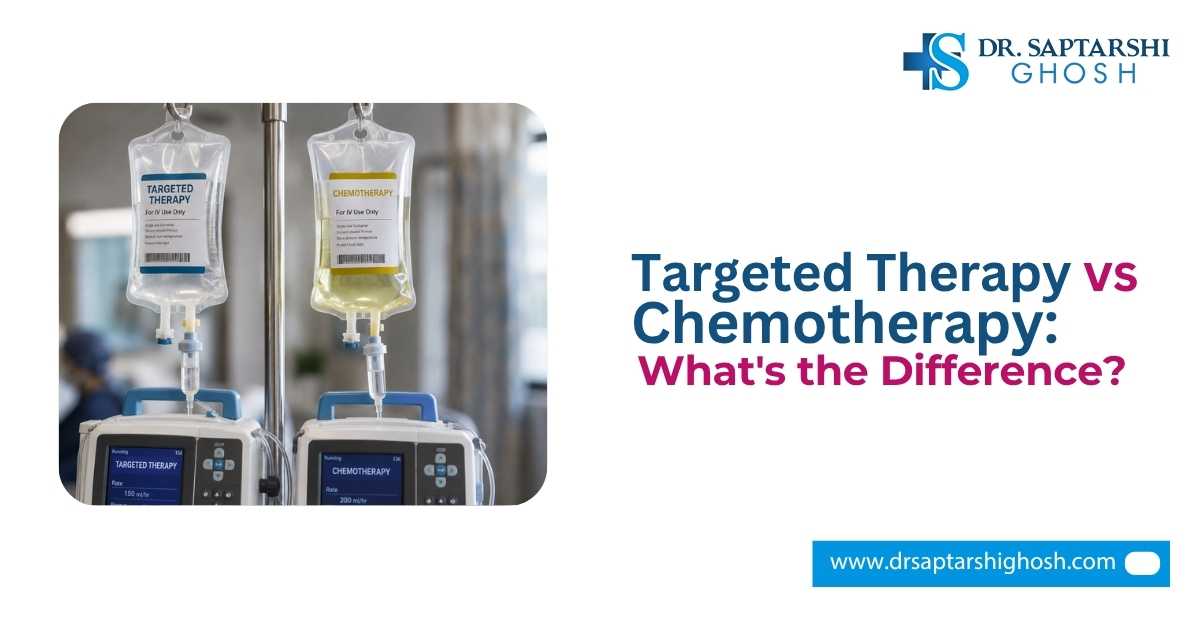
Chemotherapy targets the body's quickly proliferating cells. Though it works, it can also damage good cells, which can result in some level of side effects like fatigue, nausea, and hair loss.
The way targeted therapy operates is different, as it focuses on particular molecular anomalies in the body that are present in cancer cells.
Both therapies are still beneficial, and depending on the patient's condition, physicians may combine them.
Possible Reactions to Targeted Therapy
Targeted therapy can nevertheless have a few side effects even though it is typically more selective than chemotherapy.
The medication being used and the patient's general health determine the kind and intensity of side effects.
Skin Issues. Numerous targeted treatments may result in:
- Dry skin and rash
- Itching
- Changes you might notice in the growth of hair, including nails
Fatigue. During cancer treatment (targeted therapy), some individuals feel exhausted all the time.
High Blood Pressure. A number of medications, especially angiogenesis inhibitors, may raise blood pressure and necessitate close observation.
Digestive Problems. Patients could also experience:
- Nausea & diarrhea
- Low appetite
- Mouth sores
Some Liver Issues. Regular blood testing is necessary because some targeted medicines may impact liver function.
In order to execute the proper management measures, it is crucial that patients promptly notify their healthcare provider/ oncologists of any side effects.
Targeted Therapy's Restrictions
Even though targeted therapy has transformed the way cancer is treated, there are still difficulties present.
Not All Cancers Have Targetable Mutations
Treatment options for many cancer/ malignancies are limited because they lack discernible molecular targets.
Resistance to Drugs
Yes, over time, cancer cells may change and develop resistance to specific treatments. Hence, the efficacy of the treatment can become low when resistance increases.
Cost-related Factors
In this case, patients and medical systems may face financial difficulties due to the high cost of many targeted medicines.
Continuous Monitoring Is Required
To evaluate the efficacy of cancer treatment and identify side effects, patients frequently need routine imaging studies, blood tests, follow-up visits, palliative care, etc.
What Studies State – Overview
New genetic mutations and biochemical pathways that can be addressed with the newest medicines. Researchers are creating more patient-centric treatments because of developments in artificial intelligence and genome sequencing.
Future advancements may be:
More accurate medication targeting
- Immunotherapy in combination with other treatments
- Better detection of biomarkers
- Low side effects
- Improved drug resistance management
No doubt, targeted therapy is expected to become more important in the treatment of cancer globally as research advances.
Final Words
In the treatment of cancer today, targeted therapy is of great importance. Compared to many conventional medicines, this targeted therapy provides a more accurate and customized approach.
This targeted approach actually focuses on very specific genes, proteins, and molecular pathways that propel cancer growth. Targeted therapy has improved outcomes for many patients with tumors that have identified molecular targets.
Speak with one of the top oncologists in Siliguri, Dr. Saptarshi Ghosh, for effective cancer care and optimal recovery.
FAQs
1. What is targeted therapy's primary goal in cancer treatment?
It is to minimize harm to healthy cells by targeting very specific genes, proteins, or biological pathways in the body that allow the growth, including the spread, of cancer cells.
2. Is chemotherapy the same as targeted therapy?
No. While targeted therapy concentrates on particular defects seen in cancer cells, chemotherapy targets rapidly dividing cells throughout the body.
3. How can doctors determine whether targeted therapy will be effective?
To find specific genetic mutations or proteins in the tumour, oncologists/ doctors use this vital diagnosis/ testing.

